Research data scientist. I'm enthusiastic about technological innovation with a focus on parallel processing, computational geometry, data exchange, computational mechanics. The following sections are updated periodically (~quarterly) to reflect major contributions to disclosed projects that I'm working or have worked on. If you would like to contact me please feel free to do so either by email or Linkedin.
A computational mechanics & high performance computing research associate at EPCC - UKs National Supercomputing Centre. My research interests include low latency computing, short range particle contact dynamics, computational geometry. Application in rigid body impact dynamics, kinematics, nuclear safety, industrial processing, robotics and geospatial data analysis. PhD in Computer Science and Engineering at Durham University. The research was funded by Engineering and Physical Sciences Research Council (EPSRC), Électricité de France (EDF ENERGY) UK and ARCHER.
The Delta Project
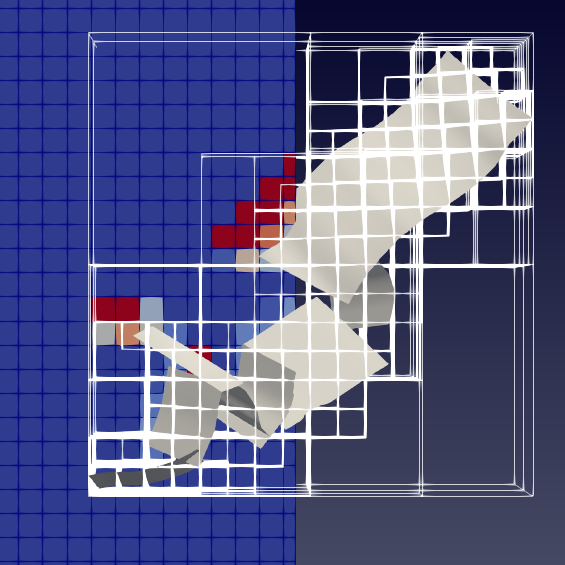
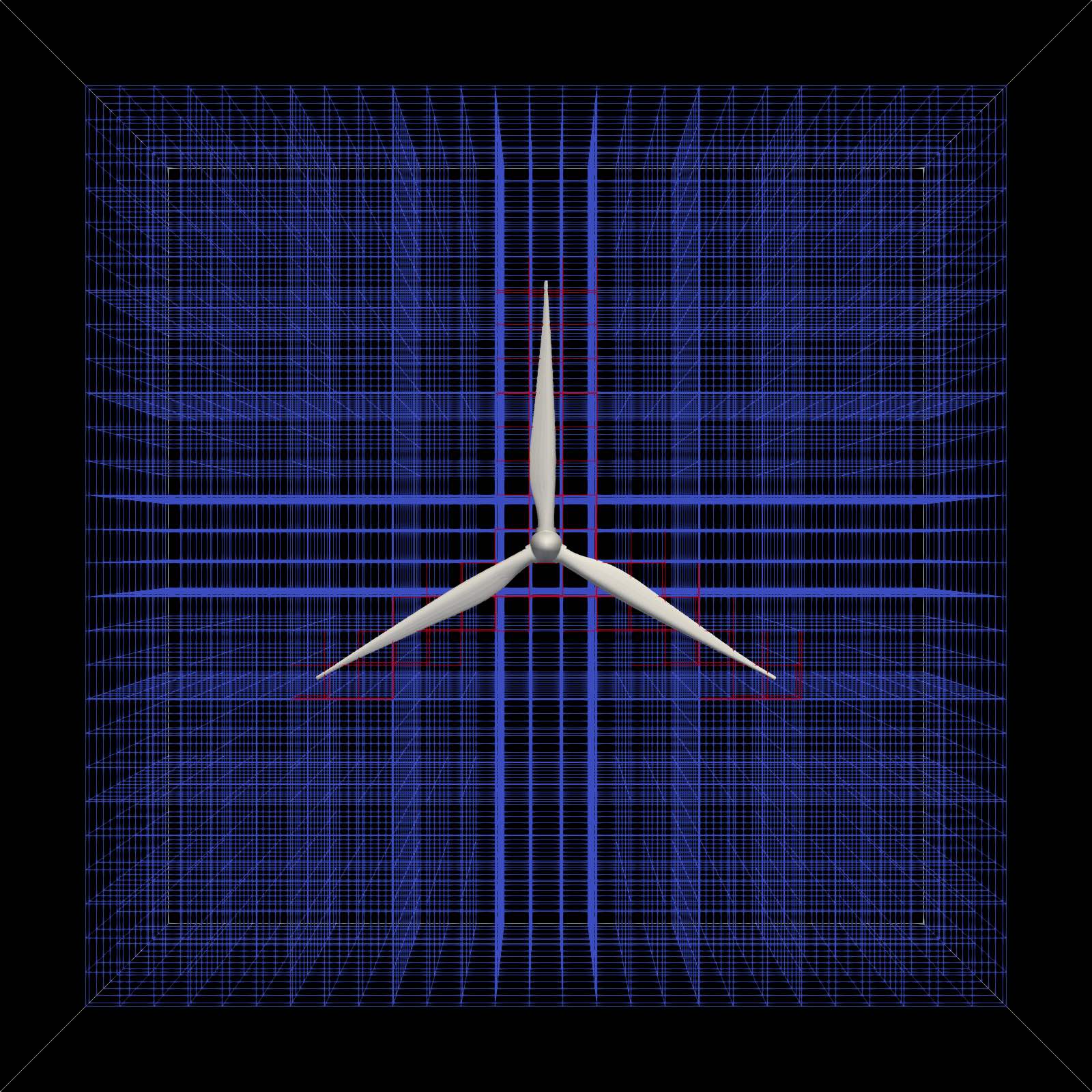
The creator and lead developer of project Delta: An explicit multiscale parallel Discrete Element Method (DEM) for contact simulations. Influenced, inspired by SOLFEC, PARMES and PEANO codes for simulating contact and space discretization. Delta library is a list of open source HPC routines of multi-body contact method for unstructured meshes of non-spherical particles. Potential applications in process engineering, aggregates, robotics. More information can be found here.
Peer Reviewed Publications
Parallel multiscale contact dynamics for rigid non-spherical bodies. Konstantinos Krestenitis. Durham University 2018, United Kingdom. British Library
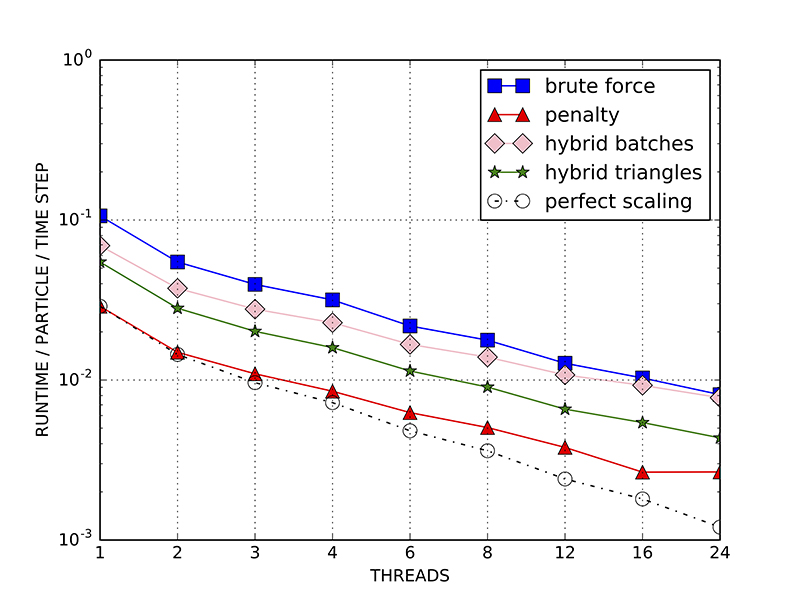
A Multi-Core Ready Discrete Element Method With Triangles Using Dynamically Adaptive Multiscale Grids. Krestenitis, K. & Weinzierl T. Concurrency and Computation: Practice and Experience 2018. PDF
Fast DEM collision checks on multicore nodes. Krestenitis, K. & Weinzierl Tobias & Koziara, T. PPAM 2017. Lublin, Poland. PDF
A Distributed Memory Parallel DEM Contact Dynamics Code using Triangles for Non-Spherical Particles. Krestenitis, K. & Weinzierl Tobias & Koziara, T. SIAM Parr 2016. Paris, France.
A Multiscale DEM Contact Detection Code using Triangles for Non-Spherical Particles. Krestenitis, K. & Weinzierl Tobias & Koziara, T. ACME 2016. Cardiff, United Kingdom. PDF
Calculating the minimum distance between triangles on SIMD Hardware. Krestenitis, K. & Koziara, T. ACME 2015. Swansea, United Kingdom. PDF
Technical Manuscripts
Short Delta Guidebook: A Discrete Element Method Library for Tessellated Geometries. Durham University. EPCC ARCHER. 2018., United Kingdom. PDF
Research data scientist at Resourcematics, London. At Resourcematics, Konstantinos leads data analytics, algorithm development and process automation. Involved in the location intelligence analytics of the company & software architecture development with external IT consultants.
A water risk model that takes in-depth account of three water usage domains – domestic, agricultural and industrial. For domestic water this includes formal, informal water supply as well as rural and urban water supply. For agricultural water demand, rainfed and irrigated agriculture of 162 crops worldwide is considered. The industrial water demand draws data from 13 major industries: power generation, oil and gas, petroleum refining, mining, chemicals, metals, automotive, food and beverages, microelectronics, pulp and paper, textiles, pharmaceuticals and bio fuel. Based on historical data the model forecasts water risk at 5 X 5 arc minutes (approximately 9 X 9 kilometres at the equator) resolution.
The lead developer of project ECOmpliance, ECOscore, Domestic Energy Efficiency Mapping Tool and many other industry automation toolkits to increase productivity.
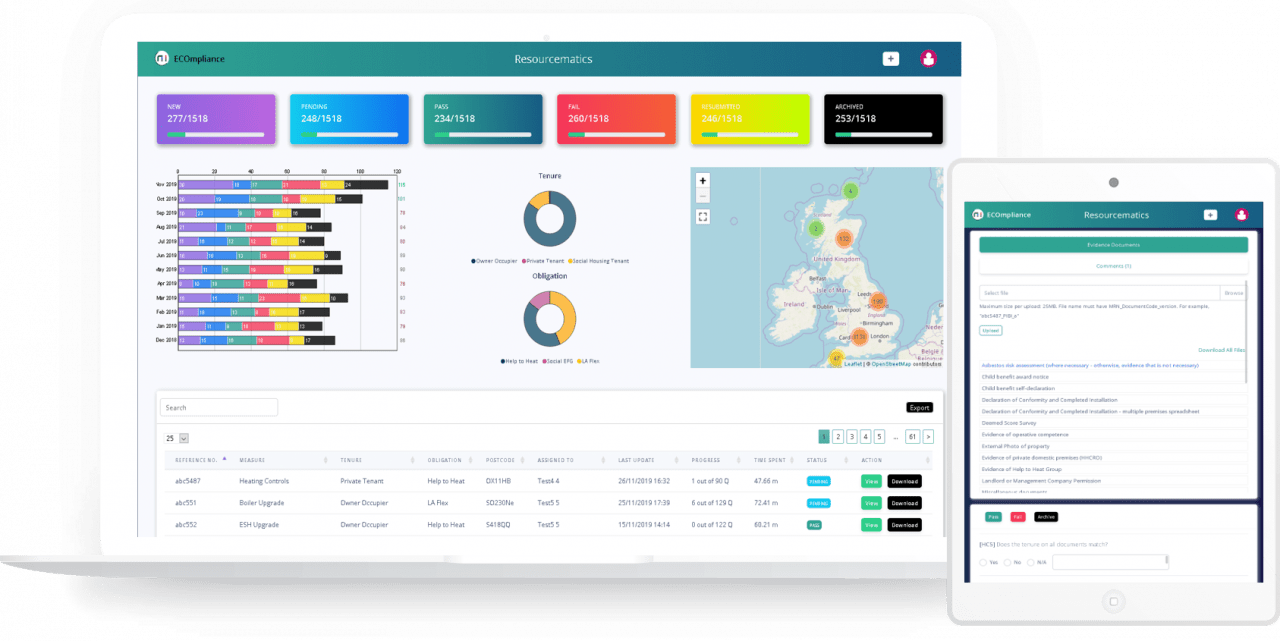
ECOmpliance
Designed to promote a systematic approach to data sharing and compliance checks on Energy Company Obligation (ECO) measures.
Solution stack: Python, Flask, ReactJS, Kubernetes, Docker, Redis, Postgres, Pandas, ODK Central
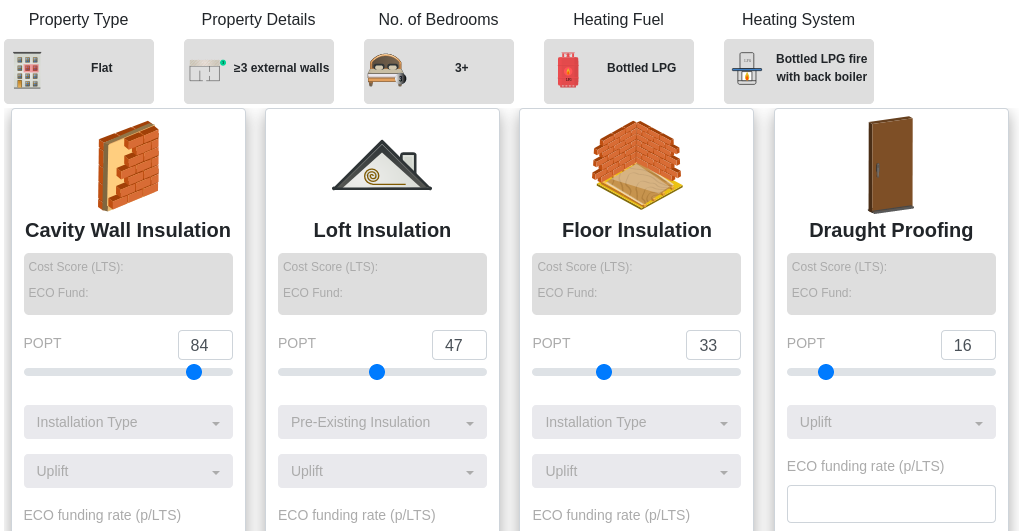
ECO Deemed Scores Matrix
A data proecessing tool was developed to produce energy efficiency scores based onthe latest ECO3 Deemed Scores Matrix published by Ofgem - the UK energy regulator. The interactive tool accept property details and produces scored per energy saving measure.
Solution stack: Python, Pandas, Flask, ReactJS
CRMs for UK Energy Utilities
Multiple projects that produced CRM systems for thousands of UK energy consumers. The aim of the project was to computerise communications & storage of consumer communication as well as compliance with UK energy regulation under the Warm Home Discount scheme. The systems were/used over several years by call centers and admin staff of utility companies. The system could track consumers from registration to each pre-programed stage of communication and document handling. A system was in place to handle personal data for compliance and company obligation. The deployment is highly integrated into existing company workflows with a public-facing and admin-facing components.
Solution stack: Spring Boot, ReactJS, Java, MySQL, JSP
Domestic Energy Efficiency Mapping
A standalone web application for Energy Company Obligation (ECO) the DEEM Tool – a web-based Domestic Energy Efficiency Mapping Tool. Its objective is to help suppliers, installers and lead generators to identify potential areas for the ECO3 installations, Warm Home Discount (WHD) and industry initiatives. The DEEM tool assists ECO stakeholders in understanding the intensity of fuel poverty and status of domestic energy efficiency at various administrative levels, e.g. LSOA, Data zone. Data mapped include dwelling and tenure types, central heating system, household compositions, access to main gas, EPC ratings and intensity of fuel poverty and estimate relevant numbers at postcode level. The DEEM tool users can overlay private GIS data to combine insights.
Solution stack: QGIS, Python, Pandas, Flask, JQuery, Docker, Postgres, Geoserver